Trend monitoring · Decision support for urinary tract infection
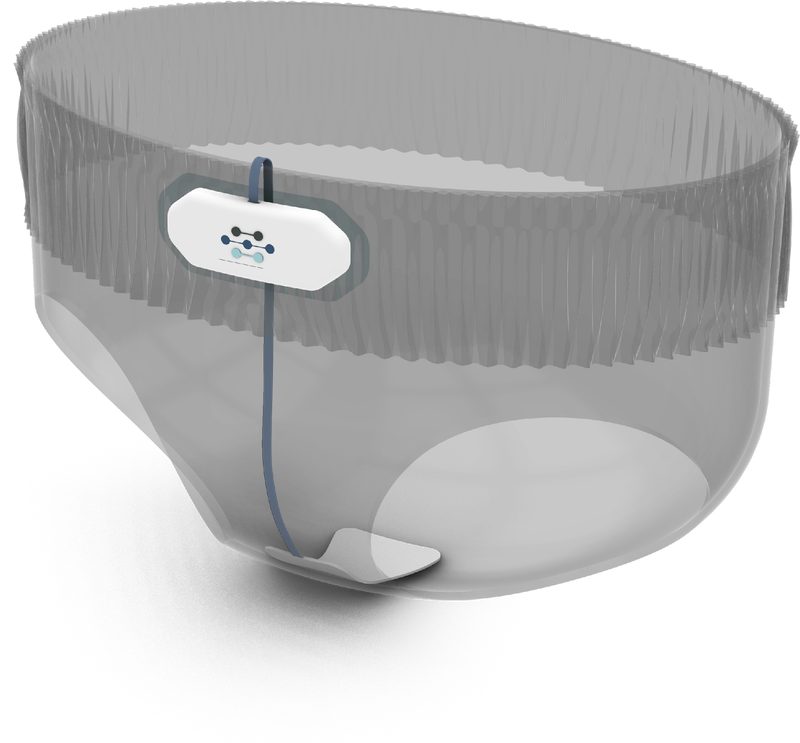
Kihleo's biosensor monitors trends directly in the incontinence product and gives care staff a data-based foundation to follow up on the resident, faster and with higher quality than today.
Our goal
We want early signs of illness to be clearer, so staff can follow up in time before something becomes serious and spend more time on presence and care, rather than serious courses of illness that could have been caught earlier. Objective signals should supplement what is otherwise hard to see in a busy day.
The problem
Detected too late or too early
Urine dipsticks (the current test often used first) are unreliable in older people with symptoms and often give false alarms. A study finds a specificity of just 39% (Moragas et al., 2026). This leads to unnecessary antibiotics. At the same time, symptoms are overlooked in many residents, especially when dementia or other age-related conditions make it hard for them to express themselves and sense discomfort.
The most common infection staff encounter
Urinary tract infection is among the most common infections in Danish nursing homes. In a nationwide survey, 7.17% of residents received antibiotics or similar treatment, and urinary tract infection was the most common cause (HALT 4, SSI 2023).
Up to DKK 400 million a year
Urinary tract infections that arise during hospital treatment are estimated to cost Danish society up to DKK 400 million a year, solely because patients stay longer in hospital (DSR 2019).
Process
Sensor in the product
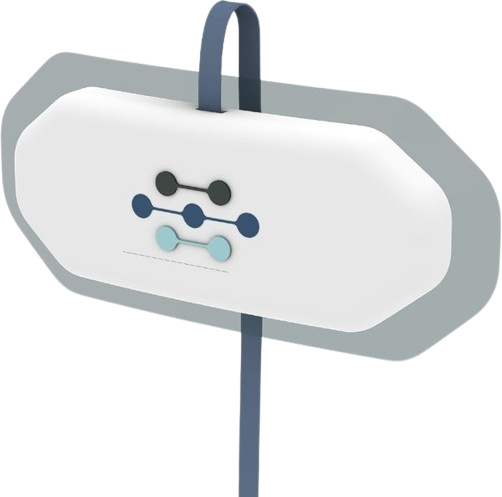
The biosensor is integrated into the incontinence product and continuously measures electrochemical and optical parameters, without changing the resident's everyday life.
Trend analysis
The system calculates and monitors patterns over time, with the aim of forming a picture of trends.
Follow-up signal
Care staff receive a clear signal to follow up on the resident, either via Kihleo's app or their own health systems. Assessment and decisions about further action remain with staff.
Jonathan talks about Kihleo, the problem we address, and how the sensor gives staff a clear signal for follow-up.
About us
When a close family member became seriously ill as a result of a urinary tract infection, I experienced how badly things can go if a seemingly minor illness is not noticed early. I thought it was almost harmless, something that could be treated fairly simply. It was not. But I learned that if it had been noticed a little earlier, it might not have become so severe. I therefore began to look into what could have been done differently, so it could have been noticed before it became serious. In this case there were visits from competent and caring home care staff several times a day. Small signs are easily overlooked in a busy everyday routine, and the early signs may well have been there, but not clear enough, before the illness suddenly became so strong that it turned serious, and it happened fast.
Conversations with people I know showed me that the experience was not unique. Several had seen grandparents become seriously ill before an infection was noticed. That is why the work began to find a solution to undetected urinary tract infection. It must be possible to identify very early signs that a urinary tract infection is developing, and to start an assessment of whether treatment should begin, before something that could be small develops into something that can become life-threatening.
In my family member's case, it was not possible to communicate about the symptoms. That is why I became focused on finding a solution that warns that “something is brewing”, as a more objective method to supplement the small signs that can be observed in each person.
The name Kihleo comes from my middle name, Kihlstrøm, which I have from the family member behind this story. It is a personal reminder of why we do this: to create better opportunities to respond earlier, when the small signs can otherwise be hard to spot.
Jonathan
Jonathan Rasmussen
Founder & CEO
MSc in EBA General Management & Analytics from CBS. Background as a management consultant in strategy and operations, with prior experience from startup and entrepreneurship environments.
Anders Buhl
Co-founder & CTO
MSc in Digital Innovation and Management from ITU. Responsible for data and software, with experience in data architecture and system integration.
Technical development team: CreateMed. Clinical and operational advisor.
Accelerator, cohort #14
KU Lighthouse, Health Innovators
CBS incubator
Startup grant
We collaborate with municipalities and partners who want to solve one of elderly care's biggest challenges with
new technology.
Reach out at